Wednesday, September 15, 2010

5 Common Financial Mistakes NOT to Make Right Now

5 Common Financial Mistakes NOT to Make Right Now

Link to Financial Highway

5 Common Financial Mistakes NOT to Make Right Now

Posted: 15 Sep 2010 04:00 AM PDT


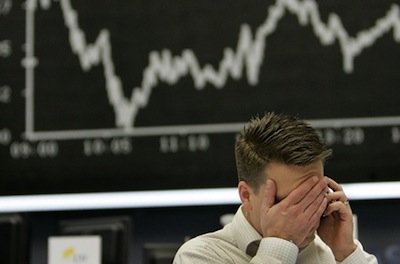
In today’s rapid-fire environment wrought with layoffs continuing, talking heads spewing advice all over the map, interest rates tanking, cities declaring bankruptcy and overall economic malaise, it’s critically important to avoid making financial mistakes that you’ll regret later.  I’ve made some of these myself admittedly, and I wanted to point out 5 very common financial mistakes and get your take on some that you’ve experienced or witnessed yourself:

  • Invest in Instruments You Don’t Understand – There’s hardly a retail investor out there who can honestly admit they’ve never bought into an investment only to realize they didn’t understand how it would behave and why it did what it did.  Some very obvious examples include commodity and volatility ETFs that you might think track the performance of the underlying index, when in fact, they lose money each month due to the rolling of futures contracts, as well as investing in leveraged ETFs without realizing that they don’t really return 2X or 3X of the underlying index over long periods of time – these are daily resets, so your returns are often much less than the 2X or 3X you assumed or you will even LOSE money when the index is flat.  There are tons of stocks, bonds, ETFs, Funds, exotic CDs, annuities and other investments out there that are poorly understood.  Don’t get into these without doing your research!  Think about it – some of these are designed with this in mind, as the turnover/commissions wouldn’t be nearly has high if retail investors knew exactly what they were all about!
  • Wreck Your Retirement Accounts – While there are certain provisions to obtain funds from your 401(k) via the hardship withdrawal provision, that doesn’t mean you should use the poor economy and slowing future prospects as license to wipe out those funds.  There are even some folks who choose to withdraw funds when switching employers instead of rolling over or use those funds to make new investments or pay off debt.  There’s gotta be another way!  These are tax protected funds that you’ll only be taxed on in retirement, which over decades makes an enormous impact on what your standard of living will be in retirement.  Don’t blow it with short-term thinking!
  • Focus Too Much on Safety – Sort of.  While it’s not advisable to be reckless with your investments, taking on appropriate risk is advisable, especially with interest rates at record lows (hence, most income investments losing money to inflation) and a long time horizon.  I have countless friends and colleagues who decided to exit from stocks completely during the 2009 market crash and they have yet to return.  They have since missed out on sizable market gains and they actually lost money in bonds in the latter part of 2009 when the risk trade was in full force.  They did the exact opposite of the what the market was doing because they didn’t stick to their defined retirement planning strategy.  Will they return?  Probably.  After stocks have run up substantially, and they will have missed some of the best gains potentially.
  • Make Stupid Moves that Impact Your Credit – In the earlier part of the last decade, credit scores didn’t matter all that much since lending was so lax and in some cases, lenders acted as though creditworthiness just didn’t matter at all, since they could securitize your loan and sell it off to someone else.  Now, more than ever, credit scores count.  They impact what you’ll pay for everything from car loans to mortgage rates, and they’ll even impact your ability to pass a pre-screen with an employer.  Now, more than ever, avoid things like co-signing on loans, closing lots of accounts simultaneously, missing payments and other activities that can adversely impact your score.
  • Chase Hot Trends – Chances are, you’re a routine retail consumer/investor.  Even if you’re a hedge fund trader, by the looks of this year’s hedge fund returns, you’ve done poorly at predicting trends.  Bubbles form and pop all over the place due to various factors and while it’s tough to pick the exact peak, there are ALWAYS signs of a bubble forming early on and in retrospect, we always find ourselves bemoaning the day we took part in the herd mentality that ultimately ended in disaster.  Internet stocks ring a bell?  Oil stocks when oil was at $140/barrel?  Real Estate?  I know, right now people are saying there’s a gold bubble, and I’m not saying it is or isn’t real.  But beware the temptation to place inordinate bets bets on something you likely don’t fully understand as well as something with a very high transaction cost like gold.  The same could be said for bonds now as well.  Don’t listen to the talking heads on television, don’t listen to me for individual picks.  Stick to a smart strategy of prudent diversification and don’t chase something your co-workers and your crazy uncle are already talking about.  The cat’s already out of the bag.

There are tons of financial pitfalls out there, we all make mistakes.  But these are some very common ones and with some simple awareness, planning and discipline, these costly mistakes can be avoided – especially now when you can ill afford them.

Did I Miss Any?

Book Review: The Skinny on Willpower

Posted: 14 Sep 2010 10:00 AM PDT


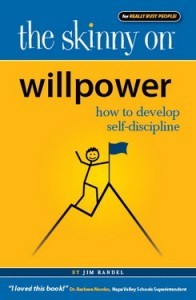
Being sincere isn't a sufficient condition for writing a self-help book. Jim Randel's The Skinny On Willpower is yet another installment in the lawyer-cum-author's The Skinny On series, (childishly) illustrated books that convey the details of time management, networking, success etc., using stick figures.
Seriously.

The Skinny On gimmick boasts that it condenses important material for the busy reader, if you can consider consuming a The Skinny On book to be "reading". With The Skinny On Willpower, your reviewer has now made it to the end of three The Skinny On books – making him perhaps the only person on the planet to do so while being neither a Rand Publishing employee nor a Randel family member.

The Skinny On Willpower is everything you've ever read in a self-help book and can recite after a lobotomy, distilled into a booklet devoid of angle, showmanship or presentation. What distinguishes Randel from other self-help authors? Well, he disdains Rhonda Byrne's The Secret, which he should. Randel's just a little more vocal about it than most of us. The content of The Skinny On Willpower is so unremarkable, one can only attack the form. Randel may be an abysmal writer, but he is consistent. The same bugbears in Randel's other titles are also on display here:

-plugging other titles in the series in the middle of the book? Check.
-quoting liberally from as many authors as he can think of? Check.
-refusing to use contractions, in the faint hope Queen Victoria might buy a copy of the book? Check.
-self-congratulation, like a line about how football kickers "exercise dominion over harmful thoughts and kick them out of their mind (good pun, huh?)" Check.

Self-help themes are so universal that it's hard to sound original while writing a self-help book. In the last 20 years, the only inventive works that resounded with this reviewer were Hyrum Smith's The Ten Natural Laws of Successful Time and Life Management and Harvey Mackay's Dig Your Well Before You're Thirsty.  But those books were written by real authors. Even in this necessarily derivative genre, The Skinny On Willpower is as derivative as it gets. If there's an original thought in this book, aside from the unorthodoxy of using stick figures to convey a point, I didn't see it.

Make your goals specific. Shun negativity. Set realistic expectations. Don't compare yourself to others. Nothing good comes easy (sic). The journey of 1000 miles begins with a first step. Discipline turns (conscious) activities into habits. Willpower is directly connected to mind control. There are no shortcuts. Beating your kids for the fun of it can be cathartic.

Those are all actual quotes from the book, followed by one that would have made The Skinny On Willpower semi-interesting had Randel chosen to use it.

Randel does introduce one concept, kind of – the difference between moderation and going cold turkey in changing behaviors. But he doesn't argue for one over the other.

By frame 132 (Randel uses frames, two to a page, rather than pages), we get another one. It's the first phrasing in the book that was unfamiliar: "ego depletion". It means that once you commit to something difficult, it makes it hard to commit to much more than that. Don't quit cigarettes and heroin at the same time, I guess. This book, like other titles in the series, is so monotonous and so simplistic that it forces a writer to search for adjectives. "Puerile" is the one that fits best so far.

This is the kind of book that a well-meaning but clueless parent will buy for a kid going off to college. If you're a well-meaning but clueless parent, a caveat: the kid will never read it.

No comments:

Post a Comment